Connecting Sleepeers, Data and Video
THE PROJECT
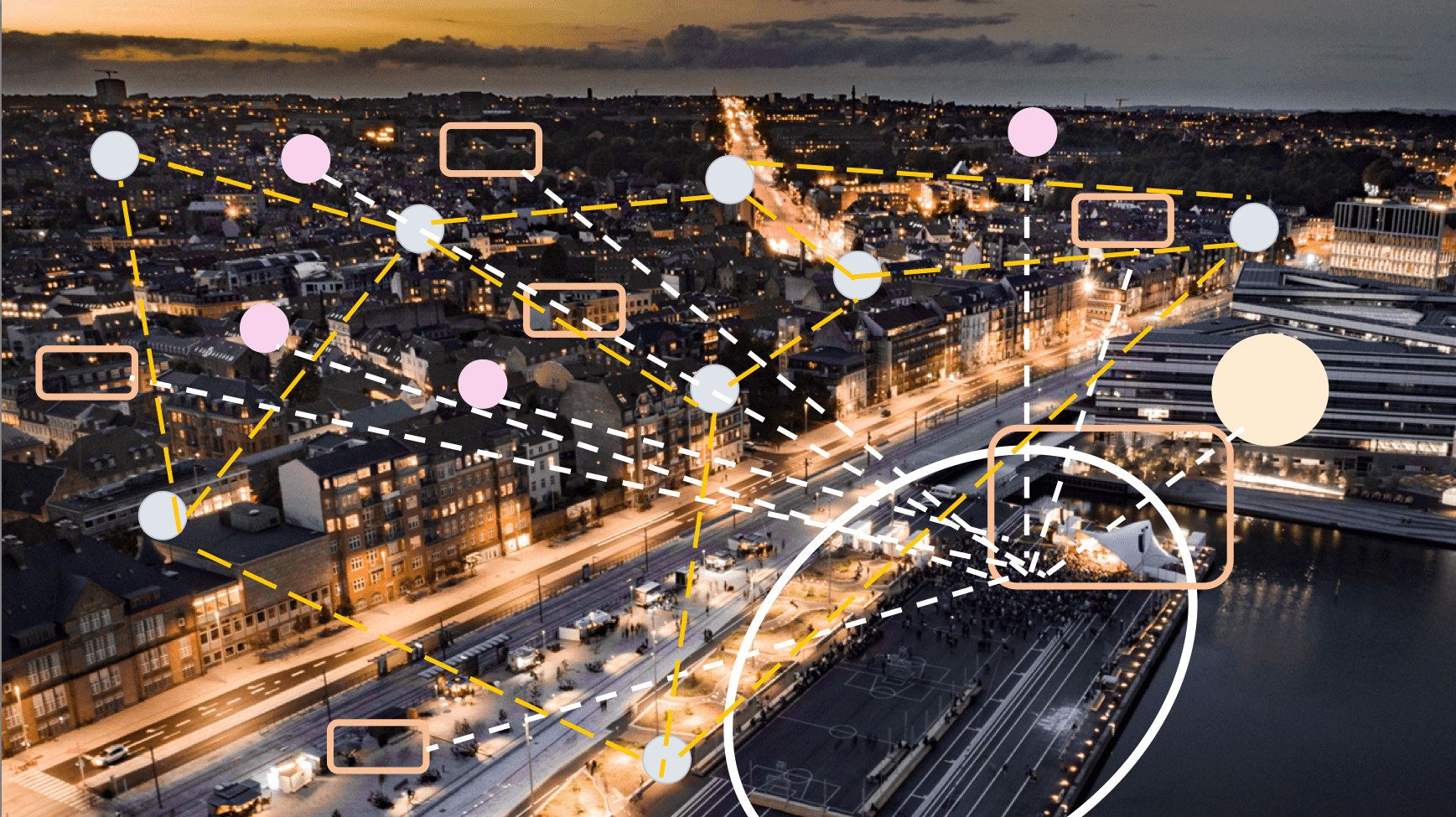
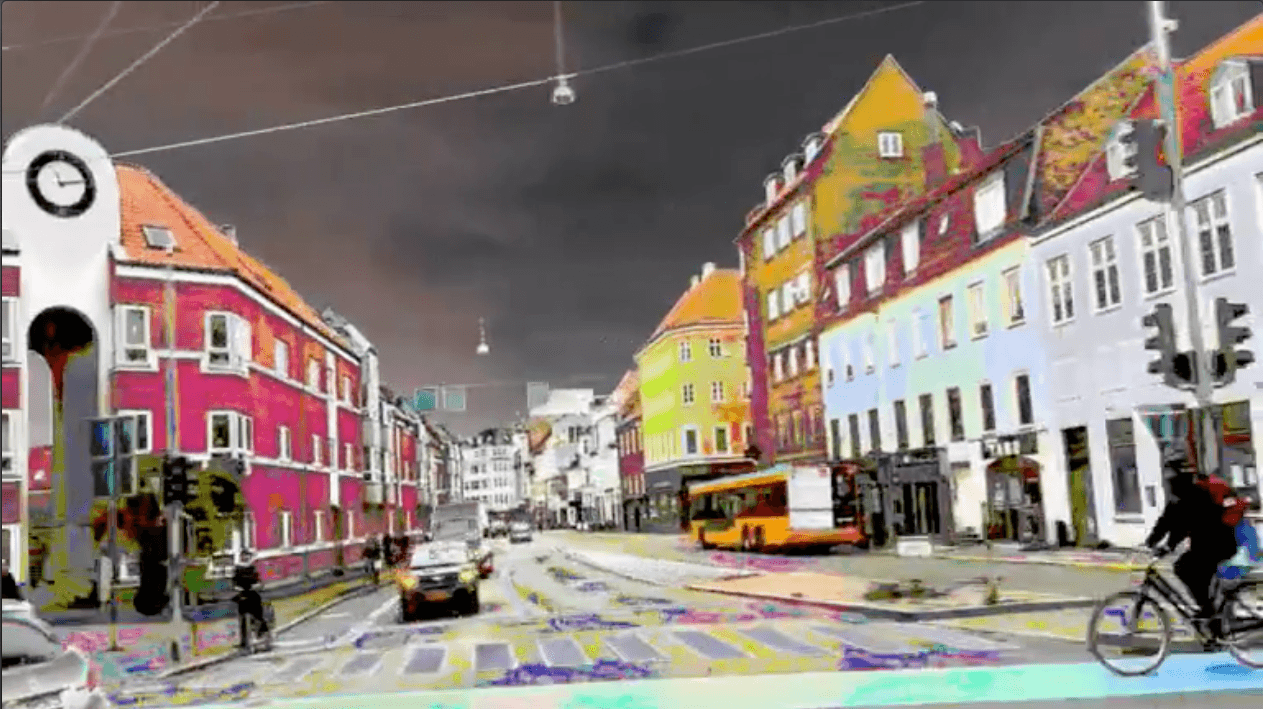
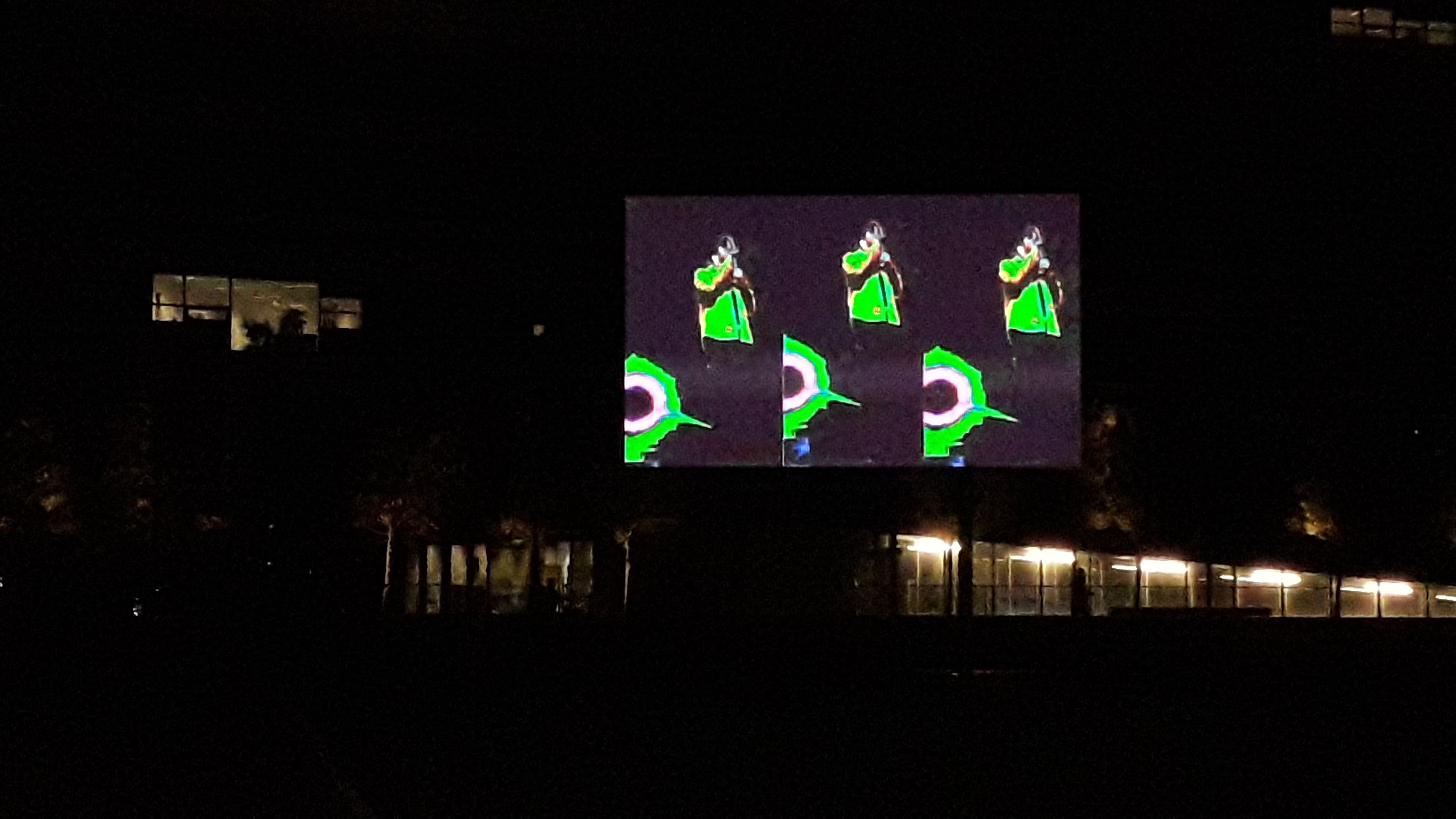
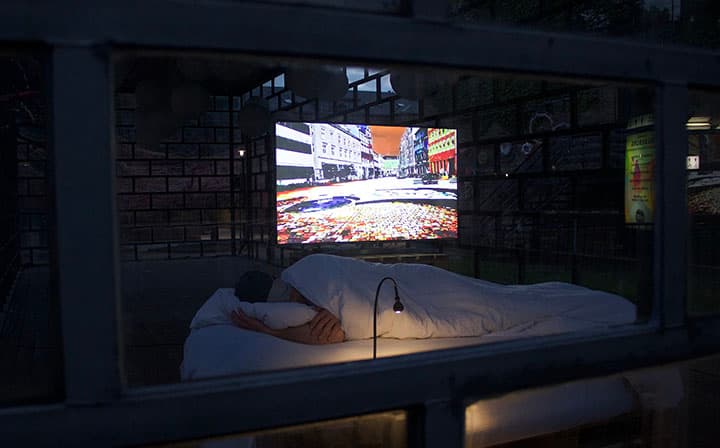
The aim of the project is to connect sleep with open networks and city data to create interactive poetic videos projected in real time throughout the city during the participants' sleeping time. We create a dream atmosphere in the city at night by projecting videos of the city taken during the day but transformed, translated and distorted by the brain waves of people's sleep and the city's open data (air pollution and noise pollution). We have realized for the first version of this project in Danemark in partnership with the Smart Aarhus City Lab ITK, Aarhus Kommune (Innovation and Technology Center) in the framework of the European S.T.ARTS (Science, Technology and Arts) residency programme, in 2018 - 2019. We also have been supported by the ARoS Museum of Denmark and Interaxon-Muse company.
THE CONCEPT
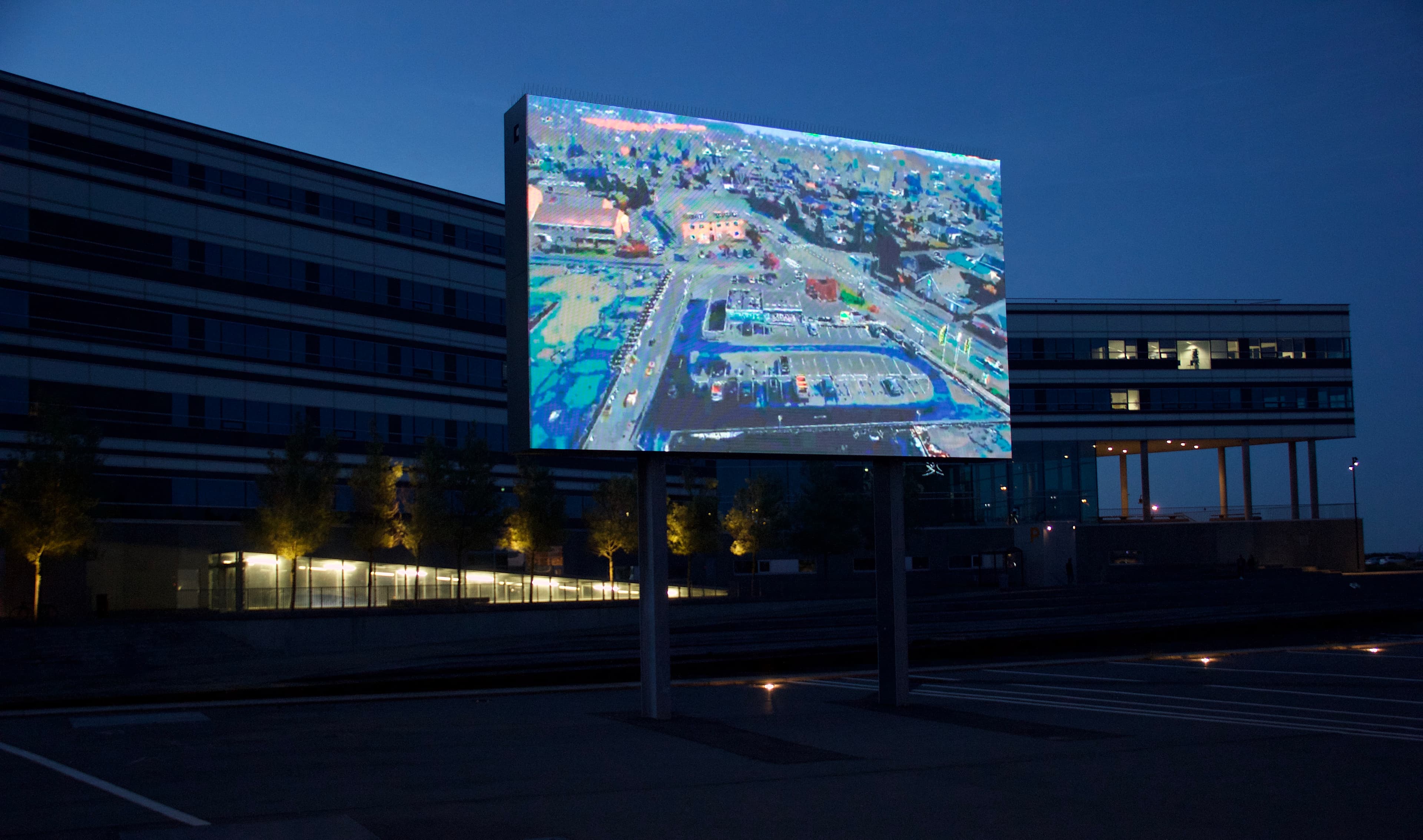
Sleep In The City questions the consciousness of sleep in relation to that of wakefulness in a participative and social way. It also experiments with the Internet of Things and questions the use of the Internet and the idea of the network. Moreover, there is a discrepancy between the sleeper's inert appearance and the richness of his or her inner experience. We want to reduce this gap in the eyes of the viewer. The Sleep In The City project metaphorically produces a mental network of sleepers through the Internet of Things that could be a means to carry out citizen action for the greatest benefit of all, for creative and aesthetic purposes. It creates a contemplative aesthetic experience of the richness of sleep, involving the participation of citizens. Spectators walking through the streets of the city and looking at the screens will thus see videos of their city taken during the day but transformed at night by their sleeping fellow citizens.
COLLABORATING WITH THE CITY
The project Sleep in The City is based on citizen participation and their relationship to their city and to the Internet use of data. Part one was first created with the support of the Starts Residencies Project as part of the STARTS initiative of the European Commission, in collaboration with the Smart Aarhus City Lab ITK, Aarhus Kommune, with the support of ARoS Museum and Interaxon-Muse. After a successful and enriching experience with the city of Aarhus and with its inhabitants who participated enthusiastically in the project, we would like to repeat the experience with other European cities by taking the experiment further into Mindnet connections and data exploration. We are looking for partnership with European cities, town halls and other institutions, that would be willing to finance the realization of Sleep In The City II. We think that our project will interest cities in Europe because of its theme, the original use of IOT, of city data, and of public screens, and most importantly what it implies in terms of relationship between the city and its inhabitants.
TECHNICAL DESCRIPTION
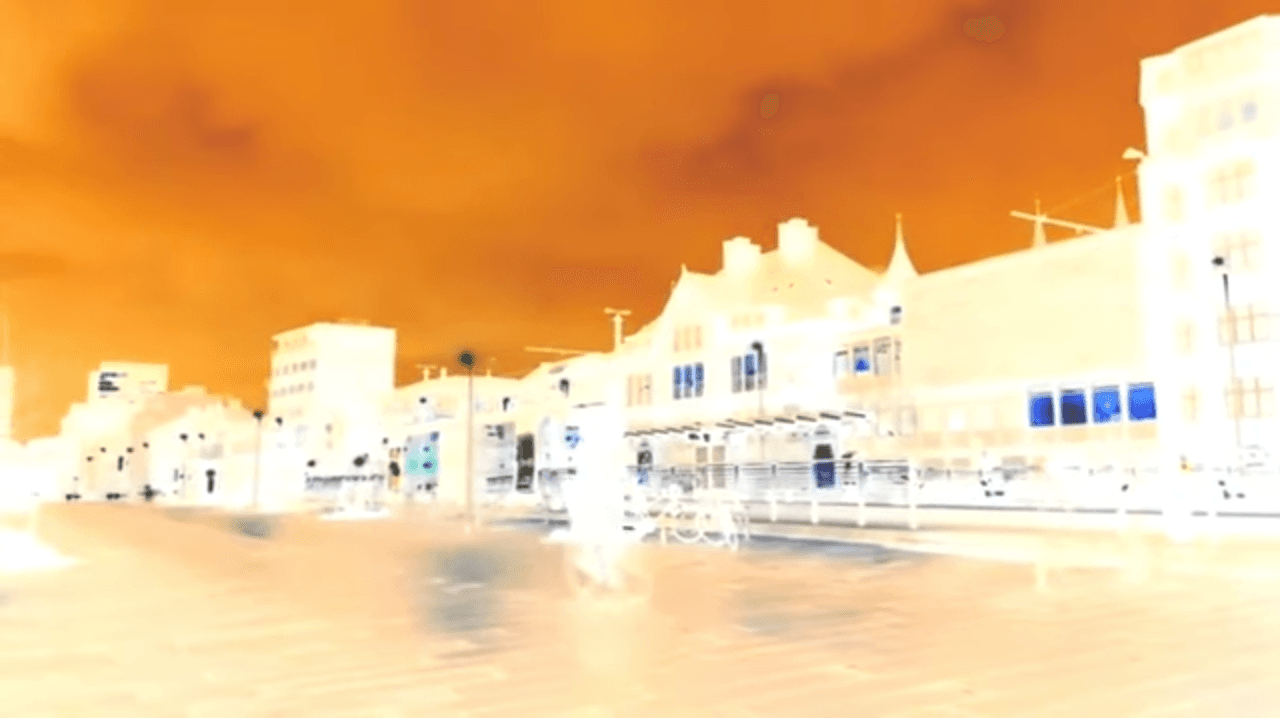
On one end of the installation, videos taken by the citizens of Aarhus and edited by us are shown on public screens of the city during the night. On the other end of the installation, we have at least five sleepers wearing headband sensors during their sleep. The volunteers will sleep in their homes. The headband sensors measure the EEG brainwaves of the sleepers and transmit them to Smartphones connected to our network Sleep in the City. We measure the five main brainwaves Delta, Theta, Alpha, Beta, and Gamma. The Smartphones send the data to a server that receives also noise and pollution data measured by the City. This datum (sleep brainwave data and city sensor data) will control the aesthetic of the videos in real time. The levels of noise and pollution, and the variation of the amplitude of the brainwaves delta, theta, alpha, beta, and gamma, control the tonal value of the video image as well as the choice of colors and the degree of abstraction. Each range of brainwaves has its effects ranging from warm tones to cool tones or from pure colors to degraded colors, going through broken to deep tones.
Images & Videos
Explore the visual journey of Sleep In The City through our curated collection of images and videos.
MEET THE ARTISTS
Walid Breidi & Virgile Novarina are the creative minds behind Sleep In The City. Walid Breidi After studying Sociology and Politics at the University of London (Birkbeck College), Walid moves to Paris where he works for an international engineering company. In the early 90's, he starts working in computer-assisted music, and the new technology opens up possibilities for him in multimedia and interactive creations. He becomes a founding member of a collective called Faim de Siècle, where he creates soundtracks for their performances and especially interactive installations. From there he evolves to the creation of public interactive multi-media installations. Walid also obtained a masters degree in Arts and Digital Creation and was a lecturer on digital creativity for ten years at the Paris-Est Marn La Vallée University. Central to Walid's work are the questions involving empowerment, the process of individual and collective creation, the unexpected, the duality between finished artistic objects and open processes, the relationship between the author of work and the public; creator of work. These questions are essential to him as a digital artist. Walid's performances and installations have been presented in Europe, North America, Africa and Asia. Virgile Novarina After studying Mathematics and Physics, Virgile Novarina (born in France in 1976) devoted himself to the artistic exploration of his own sleep through writings and drawings, and the sleep of others through photographs and films. He has published seven books of Night’s Writings and Drawings, and has exhibited his work in Europe and the United States. Since 2006 the very act of sleeping has become an integral part of his work, through the “En Somme” series of performances, during which he sleeps publicly in shop windows, galleries or museums. In 2010 Virgile Novarina met the digital artist Walid Breidi. Their encounter led to the creation of three projects involving sleep, brainwaves, interaction, and digital art: « La Bulle Paradoxale », « Sleep in the City », and « Quantum Dream » (the latter with the collective LABOFACTORY). In parallel, Virgile Novarina makes documentary films about artists he admires, including Jean Olivier Hucleux (From the Work to the Artwork), Eduardo Kac (Inner Telescope), and soon Pierre Pinoncelli (Have you taken your Pinoncelli today?).
Supported by